Buyer's Guide

Stainless Steel vs. Quartz vs. Granite: Which Countertop Is Right for Your Kitchen?

Choosing a countertop is one of the biggest decisions in a kitchen remodel — and the honest answer is that no single material wins on everything. Here is a straight comparison of custom stainless steel, quartz, and granite across the factors that actually matter, from the shop that fabricates the stainless.

The honest comparison

All three are good materials. Where each one wins depends on how you cook, how much maintenance you want, and whether the top goes indoors or out. Numbers are typical installed ranges in Southern California.

FactorStainless SteelQuartzGranite
Cost (per sq ft, installed)$80–$225$105–$185$95–$225
Heat resistanceExcellent — set a hot pan directly on itModerate — resin can scorchExcellent
Sealing / maintenanceNone — never needs sealingNone — non-porousRe-seal every 1–3 years
Scratch behaviorShows fine surface scratches; buff out, blend into grainHides scratches wellVery scratch-resistant
Lifespan30 years or more20–25 yearsIndefinite if sealed; chips are permanent
Integrated sinksYes — formed from one seamless sheetPossible, but with a seamNo — separate sink required
Food safetyNon-porous, food-safe, NSF-capableNon-porous, food-safePorous — must stay sealed

Where quartz and granite genuinely win

We are not going to pretend stainless is the answer for everyone. Quartz offers far more color and pattern variety and hides everyday scratches better — if a flawless, low-fuss look is your priority, it is the more forgiving surface. Granite brings natural stone character and, sealed properly, can last a lifetime with excellent scratch resistance. If your decision is driven mostly by aesthetics and you do not cook hard, stone or quartz may simply suit you better.

Where stainless steel genuinely wins

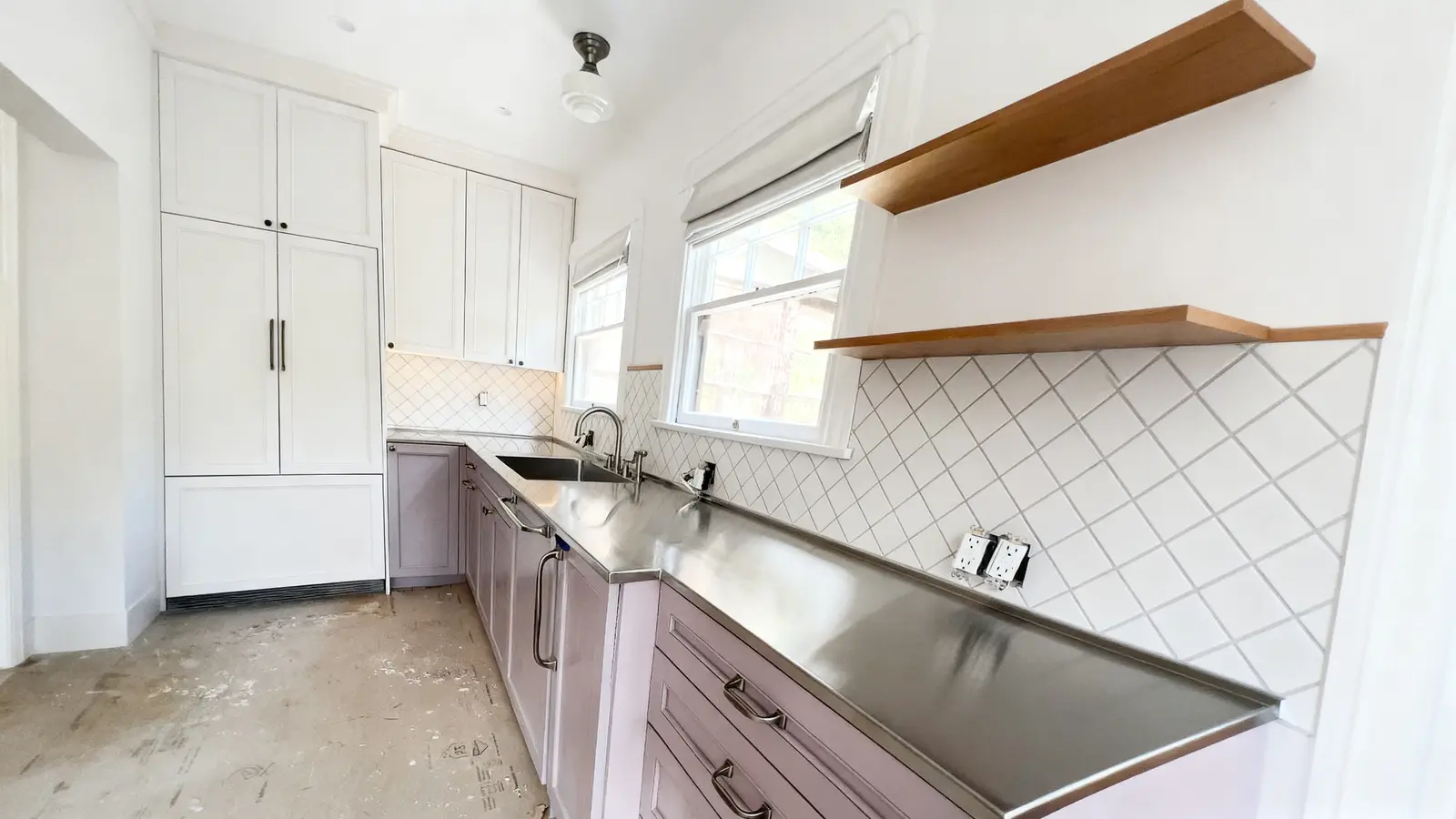
Stainless is the surface every professional kitchen runs on, and that is not an accident. It is the most heat-resistant of the three, fully food-safe and non-porous, never needs sealing, and is the only one that can be fabricated with a truly seamless integrated sink. Properly built, it outlasts the others at 30 years or more. For homeowners who cook seriously — or want a chef-grade kitchen that holds its value — stainless is the functional winner.

Decided stainless is the right surface? See our custom stainless steel countertops or request a free quote.

The questions buyers ask

How does stainless steel compare to quartz for kitchen countertops?

Stainless steel and quartz are both non-porous and require no sealing — a major advantage over granite and marble. Stainless steel is more heat-resistant (you can set a hot pan directly on it), is fully food-safe, and can be fabricated with integrated sinks and drainboards in one seamless piece. Quartz offers more color variety and hides scratches better. For homeowners who cook seriously, stainless steel is the more functional surface; for those who prioritize aesthetics and minimal maintenance, quartz is the more forgiving choice.

How much do custom stainless steel countertops cost compared to quartz or granite?

Custom stainless steel countertops fabricated and installed in Southern California typically run $80–$225 per square foot, depending on gauge, finish, cutouts, and complexity. Quartz countertops run $105–$185 per square foot installed; granite runs $95–$225. Stainless steel is competitively priced at the mid-to-upper range — and unlike stone, there are no seams on a custom-fabricated piece, no sealing required, and no risk of chipping.

Will stainless steel countertops scratch or dent?

Stainless steel will show fine surface scratches over time, especially in polished finishes. This is normal and not structural — scratches blend into the brushed #4 finish with ordinary use and can be buffed out. We recommend 16-gauge 304-grade steel for residential countertops: it is thick enough to resist denting under daily household use. Lighter 18-gauge steel will dent more easily and is better suited to lighter-duty applications.

How long do stainless steel countertops last compared to quartz or granite?

Properly fabricated and maintained stainless steel countertops last 30 years or more — this is why commercial kitchens use them and why you see 40-year-old stainless still in service in professional settings. Quartz typically lasts 20–25 years before the resin shows UV yellowing or edge chips accumulate. Granite can last indefinitely if properly sealed every 1–3 years, but chips from impact are permanent. Stainless steel surface scratches are cosmetic and can be buffed; the material itself does not degrade.

Free Quote · No Obligation

Cooking seriously? Stainless is the surface.
Tell us about your kitchen.